Back bend

The hips don’t lie

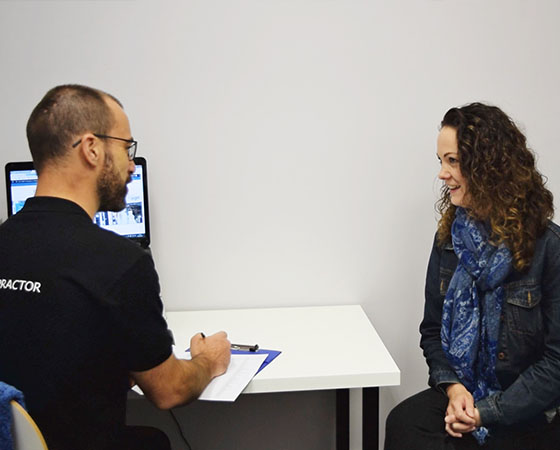
One of the things I may ask my clients to do when I assess them is to try and bend forward to touch their toes (if they can), or perform a simple body weight squat.

Despite appearances, this isn’t really to test tightness of the hamstrings or flexibility of the spine, (although we do look at that as well). Instead, I’m particularly looking at the mobility and coordination of certain parts of the body as they progress through the ranges of motion.

Our bodies are amazing. From birth, we develop an innate ability to move in complex neuro-muscular patterns without even thinking about it. For example, if you watch a toddler playing or picking things up, they will often squat or bend over for long periods of time without any movement restriction and with immaculate form. No-one has taught them that – it’s an inherent and fundamental movement. Unfortunately, as we progress through life, these movements can become “corrupted” by factors such as posture, injury, and a general lack of mobility.

To move well, some areas of the body need stability and others need mobility. The feet, knees, low back, and shoulder blades for example, need to stay stable as a base for the more mobile joints such as the shoulders, thoracic spine, hips and ankles. If one or more of these areas becomes too mobile, or not mobile enough, then other areas have to compensate.

Rehab

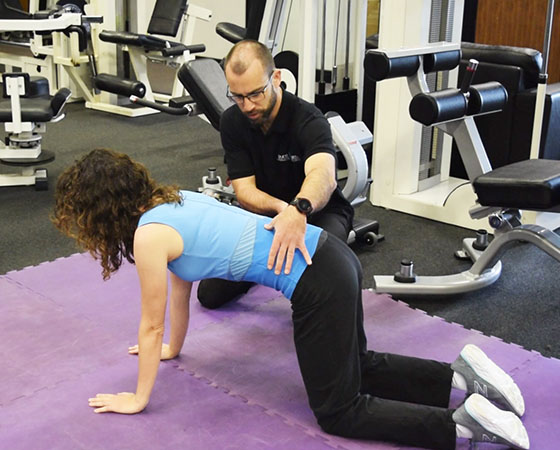
The hips in particular, are prone to losing mobility largely due to the amount of time we spend being sedentary. When we sit for long periods, our hips are in a shortened, flexed position, and our spinal and abdominal stabilisers are mostly inactive. This can often combine to cause “switching off” of the gluteals (which are vital to optimal hip coordination), restricted hip mobility (important for relaxed, efficient forward bending and squatting), and poor abdominal/spinal muscle activation (important for stability). The end result can be a loss of the ability to “hinge” through the hips in a relaxed, coordinated way when squatting or bending, whilst still keeping your spinal stabilisers engaged. Over time, this can cause poor movement patterns and increased tension in areas such as the low back and hamstrings, often leading to an increased likelihood of getting injuries and pain.

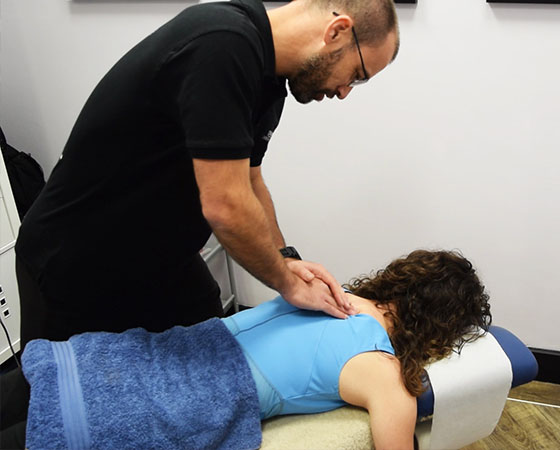
How do you fix any problems you may have? Come and see us, so that we can assess your posture and movement, and can help you to restore normal function through education, manual therapy and corrective exercises.

We can help you to achieve better health. Why not come and see what our chiropractors and massage therapists in Stafford and Newport can do for you. We look forward to seeing you.

Chris Mallett
Principal Chiropractor
Pure Health Chiropractic & Wellness (Stafford and Newport)

Text neck chiropractic

What is “text neck”?

It’s an all too common scene that I’m sure we’ve all seen before: people standing in a queue; in the office; or even walking down the street with their head forward and down.

Their eyes are transfixed on the screen of their smart phone, texting furiously as if their lives depended on it. It’s become such a part of our lives that it’s now seen as normal. But, is this modern day phenomena causing us more harm than good? Yes, maybe, is the short answer. There’s even a term for it: “text neck” – and long term it could lead to all sorts of problems.

Essentially, “text neck” is a new-fangled term for yet another postural syndrome. Postural problems aren’t new; they’ve always been around (and always will be). However, with our modern obsession with smart phones, the prolonged forward head carriage posture we often see with computer, desk or laptop use is becoming far more prevalent in general everyday life. This is particularly true of teenagers and school kids who often seem to have their phones glued to their face.

Why is this important? Posture is talked about all the time in the health professions, and blamed for a whole host of problems. There’s a reason for this – good posture puts less stress on muscles, joints, discs and vital organs! Although the human body is a fantastically adaptive and tolerant structure, if you have poor posture for long enough, then sooner or later it will start to show symptoms. There’s nothing good about the body adapting to a non-neutral forward head posture (FHP). Prolonged FHP can lead to premature disc and joint degeneration, pinched nerves, muscle pain, decreased respiratory capacity and changes to the curvatures of your entire spine. Once a poor postural pattern is set in, movements can become dysfunctional and follow us into everyday activities, including exercise. This is when further injuries can occur, often seemingly unrelated to your neck.

Chiropractic assessment

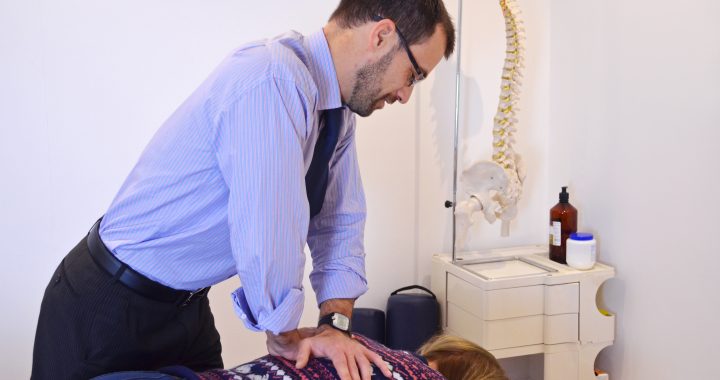
How do you fix it? Come and see us, so that we can assess your posture and movement, and can help you to restore normal function through education, manual therapy and corrective exercises.

We can help you to achieve better health. Why not come and see what our chiropractors and massage therapists in Stafford and Newport can do for you. We look forward to seeing you.

Chris Mallett
Principal Chiropractor
Pure Health Chiropractic & Wellness (Stafford and Newport)
Featured Image By Helar Lukats, CC BY-SA 4.0, https://commons.wikimedia.org/w/index.php?curid=48993365

Newport Clinic

Why Chiropractic care is different and how it works

I love being a chiropractor and being able to help people. Whether it is through improvement of spinal function; exercise; or general lifestyle advice, our main goal is often helping you to achieve your potential and not just about chasing pain and symptoms.

Whilst we often use many manual and rehab techniques to suit you and your complaint, chiropractors primarily focus on improving joint function through mobilisation and manipulation. We are experts in this respect and train for many years to deliver safe, effective techniques to peripheral and spinal joints that are restricted (or “dysfunctional”).  However, how this works is often a subject of debate. Recently, I attended a very interesting and inspirational seminar which highlighted some of the exciting neurophysiological research that is occurring in Chiropractic. In particular, how manipulation of the spine affects our body’s awareness and brain function.

Why is this important?

Imagine you are doing something apparently simple like picking a ball up. What happens? First, your brain tells your core abdominal muscles to “switch on” to create a stable platform; then you lift your arm and reach out; then you anticipate the shape, weight and size of the ball from past experience and visual input; then you pick it up. Although this all happens subconsciously in seconds, during that time billions of signals are being sent from the tissues to your brain (and vice-versa) to carefully control and modulate your muscle contractions and keep you stable. The nerve signals from your limbs, and the position and movement of the joints and small muscles around the spine are essential in this process. If this is working at its best, you are unlikely to get joint or muscle pain.

Why is this important to Chiropractic?

Research has shown that the brain can interpret these signals differently if spinal joints are not moving well. This can lead to poor control of your body movements, decreased stabilisation and potential injury or long term adaptive changes (often known as “compensation”). Correcting these dysfunctional spinal joints can aid in the “normalisation” of the information from the spine to the brain, and help the brain to accurately perceive what is happening in and around the body. When this happens it can help the muscles and nerves to respond more accurately and appropriately, and can reduce your likelihood of injury or painful conditions.

We can help you to achieve better health. Why not come and see what our chiropractors and massage therapists in Stafford and Newport can do for you. We look forward to seeing you.

Chris Mallett
Principal Chiropractor
Pure Health Chiropractic & Wellness (Stafford and Newport)

Straighten Up UK!

Recent consumer research by the British Chiropractic Association has shown that people of all ages are experiencing higher levels of back pain and discomfort and much of this is related to poor movement or posture. In the Midlands particularly, incidences of back pain have increased 12% on 2017, and we are the most likely to develop back pain before the age of 30!

As a nation, we live busy and yet sedentary lifestyles. We are dashing about one minute, full of stress and time pressured, and then subjecting ourselves to long periods of sedentary behaviour by driving for long periods, playing computer games or watching television. This often leads to de-conditioning, fatigue and ultimately poor movement, stiffness and pain. Every year, back pain results in billions of pounds in losses to the nation due to lost days at work and sickness benefit payments; not to mention the significant impact this is having on a sufferer’s quality of life.

Chiropractors are keen to highlight this issue to show people in the UK ways in which they can help themselves towards a healthier lifestyle through education, advice and if necessary a treatment plan.

As part of this, the British Chiropractic Association (BCA) has introduced an exciting programme called Straighten Up UK, designed to improve posture and help prevent back pain by promoting balance, strength and flexibility in the spine. Chiropractors want to encourage adults and children alike to start using this set of simple, three minute straighten up exercises. They are designed to be done on a daily basis and become part of the daily routine, just like brushing your teeth.

The exercises can be adapted to suit individual capabilities (although please discuss with your GP, chiropractor or other healthcare practitioner first). There are kids’ and adults’ versions of the website and leaflets, so everyone can take part. Further information about chiropractic and the programme can be obtained by visiting www.chiropractic-uk.co.uk.

If you are struggling with back pain that won’t settle after more than a few days, it’s recommended that you see a qualified professional, such as a chiropractor, who can assess you and recommend a care plan to help get you moving again.

Let us help you to achieve better health. You can book an appointment with our chiropractor Chris or massage therapists Liesa or Matt, by calling 01785 530911 in Stafford, or 01952 825042 in Newport. Alternatively you can book using our online diary.

We look forward to seeing you.

Pure Health Chiropractic

Shockwave is here!

No, it’s not the next superhero movie, but it is something quite new and exciting! We are pleased to reveal that we now have a revolutionary type of treatment called Radial Shockwave Therapy (RSWT) available at both of our clinics for new and existing clients.

It has been shown to be particularly successful in treating stubborn soft tissue conditions in the shoulder, hip, knee, foot or ankle, that are struggling to respond to conventional therapy.

Why not see what shockwave can do for you? For more information, please visit our Shockwave Therapy page or Contact Us. We look forward to seeing you.

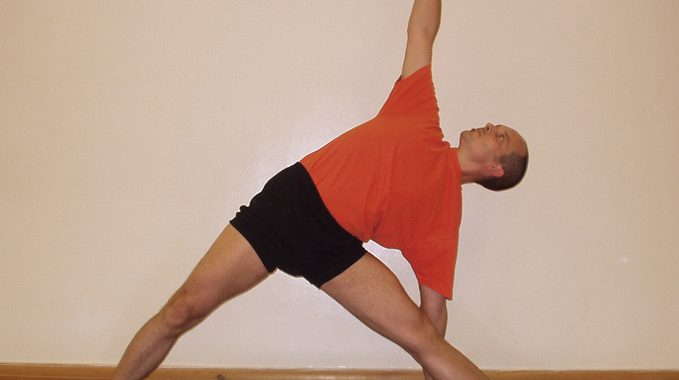
Yoga Pose Balance Chiropractic

Balance, coordination, spinal health and Chiropractic

In this blog, our Stafford and Newport chiropractor talks about the importance of balance and coordination, and how it can be an indicator of spinal and nervous system health.

Balance and coordination are vital to our normal everyday movements and a good quality of life.  If one or both of these areas are compromised, it can profoundly affect our strength, mobility and overall wellbeing.

There can be many reasons that your balance and coordination can be adversely affected, and if you do find that you are suffering with balance problems or changes in your coordination, it’s important that you are assessed thoroughly by an appropriate healthcare professional to rule out potential underlying medical causes. However, in this article I’m going to discuss how changes in balance and coordination can be affected by your spinal biomechanics; or in other words: problems with your back or neck.

As a chiropractor, I see lots of clients with back and neck problems, and we are experts in assessing and treating spinal conditions. It’s very common in my experience for clients to become biomechanically unstable after an injury i.e. unable to tolerate movements in the neck or low back without sharp pain or re-injury. Why do you think this is? Why does the body struggle to contract and engage the spinal and neck stabilisers when the muscles are still there? The answer lies in the nervous system.

The spinal structures, including the joints and the surrounding small muscles, ligaments and tendons are constantly sending messages to the brain via mechanoreceptors (nerve endings) which sense pressure, movement and stretch. This feedback is sent to the brain, which then combines it with input from various other areas (including visual and inner ear) and decides how best to stabilise the area and control coordination of movement. This subconscious awareness of position, stabilisation and coordination occurs thousands of times per second, and is often known as proprioception.

It is thought that acute injury or long term movement dysfunction issues (such as osteoarthritis), can disrupt or override this feedback mechanism and lead to further instability, injury or damage. It’s not surprising that a lot of clients I see with acute or chronic spinal issues have terrible balance and coordination. Chiropractic techniques, combined with appropriate exercises for balance and strength have been shown in various studies to help with improving proprioception.

If you need help, then come and see what our chiropractors in Stafford and Newport can do for you.

We look forward to seeing you.

Chris Mallett
Principal Chiropractor, Pure Health Chiropractic & Wellness (Stafford and Newport)


Yoga Image By Matthew Greenfield (Own work) [CC BY-SA 3.0 (https://creativecommons.org/licenses/by-sa/3.0)], via Wikimedia Commons

Is your sacro-iliac joint causing pain?

Is your Sacro-Iliac joint causing your back, hip or leg pain?

In this blog, our Stafford and Newport chiropractor talks about the Sacro-Iliac joint. But, what on earth is a sacro-iliac joint I hear you ask?

Well, the clue is in the name to a certain degree – it’s the joint that connects the sacrum at the base of the spine, to the ilium of the pelvis (hence sacro-iliac). It is essential in effectively distributing forces from the spine to the hips and lower limbs (and vice versa), but it can also be an often overlooked pain source in lower back injuries.

The sacro-iliac joint (or SIJ for short) is normally a fantastically strong and stable joint, and can tolerate amazing amounts of downward force to create stability when we lift or move. This stability is largely generated by well-controlled contraction of the surrounding muscles and tissue creating “closure” of the joint. Problems arise when this balance isn’t adequate, the joint is not sufficiently stable, and tissues or cartilage become damaged as a result. This can be acute (sudden) or could be chronic (long term and recurring), but in all cases it tends to hurt quite a lot.

Pain originating from the sacro-iliac joint is often confusing as it can be mistaken for injuries to other structures. For example, acute SIJ pain can often refer to the buttocks and down the back of the leg mimicking sciatica or disc symptoms. It could also refer to the groin and anterior thigh, mimicking hip arthritis. Or it could simply radiate to the spine, mimicking a facet joint issue.

Often with long term and recurrent problems, repeated flare-ups are caused by either too much movement (hypermobility) or too little movement (hypomobility) of the joint. Both can respond well to rehab and/or chiropractic adjustments and it is important to determine possible faulty muscle activation around the pelvis, and improve these as necessary.

In all cases, it is vital to get checked out by a qualified and experienced spinal professional such as a chiropractor. We will assess and treat not only the painful symptoms, but also look to address the underlying causes. Remember: Good spinal function is essential for movement; Good movement is essential for health; Chiropractic helps to maintain good spinal function.

If you need help, then come and see what chiropractic and massage can do for you. We look forward to seeing you.

Chris Mallett
Pure Health Chiropractic & Wellness – Stafford and Newport

Featured image by RadsWiki (RadsWiki) [CC BY-SA 3.0 (https://creativecommons.org/licenses/by-sa/3.0) or CC BY-SA 3.0 (https://creativecommons.org/licenses/by-sa/3.0)], via Wikimedia Commons

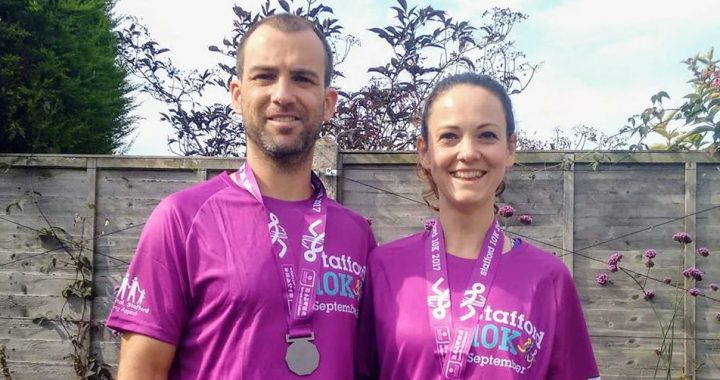
Stafford Chiropractor Chris and massage therapist Liesa run the Stafford 10k

Chiropractor Chris runs the Stafford 10k!

First of all – a big thank you to everyone who helped our Stafford and Newport chiropractor Chris and massage therapist Liesa raise money for Spinal Research!

A few months ago, it seemed to like a good idea to sign up with a few of my friends and colleagues in running the Stafford 10k. “It’s not that far”, I thought to myself. As I ran the final stages through the town centre with a ferocious “stitch” to the point of having to walk, I realised that maybe I should’ve done a bit more training, and also not eaten so many jelly babies half way round!

Once I’d recovered, it turned out I hadn’t done too badly. A 55-minute 10k with not really much training was pretty good for me. With the guys from the gym also doing well and (more importantly) enjoying it, we’d managed to raise a decent amount for charity and had fun too. Well done to everyone who took part!

I’d avoided doing much running in the 12 months leading up this event. This was partly due to injuring my knee in April; partly because I’m not a keen runner; but mainly because I’d developed a lot of calf and heel pain when trying to run any sort of distance since doing the half marathon in 2016. I’m not a natural runner and if you’re anything like me at running, then you will tend to “plod” rather than “glide” along. For me, this created a lot of tension in my feet, legs, pelvis and lower back and often led to shin splints, with accompanying back and heel pain.

There was a good reason for this, and it’s the same reason a lot of amateur athletes get pain and restriction: I was terrible at post-exercise stretching! Much like everyone else, as I became fitter, I also became complacent about warming down and stretching after training.

As we age, unfortunately our bodies don’t recover or regenerate as quickly as they used to. It’s absolutely vital that we warm down and stretch adequately to ensure that we don’t develop myofascial restrictions which can easily lead to changed movement, restricted mobility, and painful conditions. I now do this after every workout (finally listening to my own advice!), and have noticed a huge improvement in my ability to run pain free.

If you want help too, then why not see what chiropractic and massage can do for you. We look forward to seeing you.

Chris Mallett
Pure Health Chiropractic & Wellness – Stafford and Newport

Our Chiropractor rides the Alps!

I’m pleased to report that I managed to survive a week of mountain biking in the French Alps relatively unscathed despite one high speed crash and a few scrapes and bangs on the head.

My knee performed well, although a bit achy, and after 175 miles of downhill (and even some uphill), I came home feeling like I needed another holiday!

The area we were in (around Briançon in south-east France) was hosting part of the Tour de France this year, which provided the inspiration to hire a road bike for a day with some friends. I’d never ridden a road bike before (the lycra look and the UK roads put me off!), but this was France and the Alps are amazing, so we decided to ride up the Col du Galibier, one of the highest mountain passes on the tour. Overall, it was an awesome experience, and although I didn’t find the climb too bad, holding my head up on the 45 mph descent was agony! I can now fully understand why I see cyclists with painful necks as chiropractic patients!

Stafford and Newport Chiropractor

Recently, back in the Stafford and Newport chiropractic clinics, I’ve seen a few clients who seem surprised when I say that I can look at their foot, knee, ankle, hip or shoulder problems as well as their back pain, neck pain or headaches. Many people think that chiropractors only treat backs, but that’s simply not the case. Chiropractors are well trained in recognising, treating and giving advice and rehab plans for many different neuromusculoskeletal (nerve, muscle and joint) conditions. The main difference between chiropractors and other therapists, is that we also look to identify and address any spinal joint dysfunction i.e. movement issues in the small joints of the spine. Without a stable and well-functioning spine and torso, your peripheral movement, strength and coordination will almost certainly be compromised too.

Good spinal function is essential for movement; Good movement is essential for health; Chiropractic helps to maintain good spinal function.

Whatever your injury or movement problems, we will work tirelessly to help you to get back to your optimum and stay that way. See what chiropractic can do for you – I am available in Newport on Tuesdays, Thursdays and Saturdays and also in Stafford on Wednesdays and Fridays. I look forward to seeing you.

Chris Mallett
Pure Health Chiropractic & Wellness – Stafford and Newport